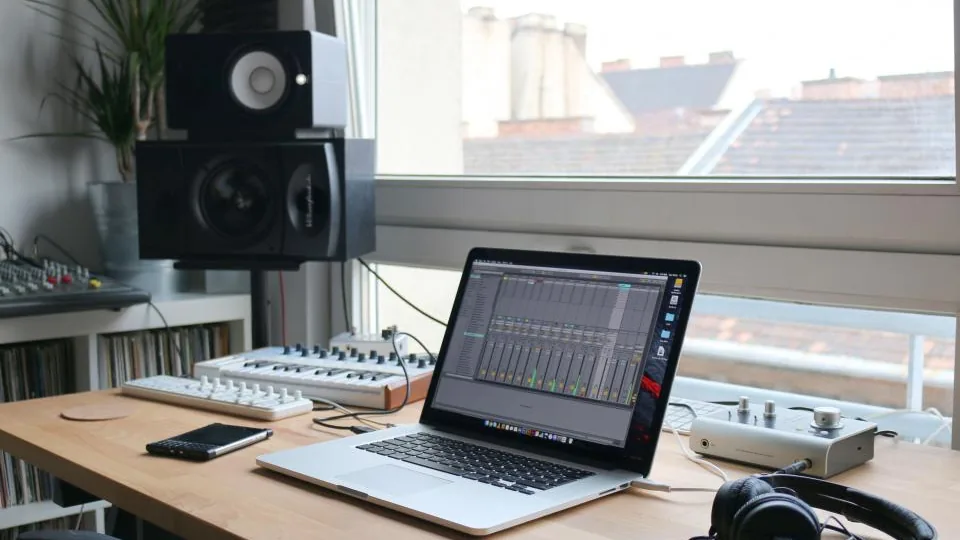
Compare home cam work with a managed studio across privacy, cost, control, equipment, training, contracts, and long-term flexibility.
Start with the right operating principle
Starting well is mostly a sequencing problem: legal eligibility and privacy come before public promotion, and stable basics come before expensive upgrades. For this subject, begin with calculating commuting and equipment costs and protect the plan against signing under pressure.
A workable version should survive an ordinary week. Define the acceptable outcome through take-home percentage, name the boundary connected to letting a studio own your brand, and limit the first test to reading every studio contract. That sequence turns the broad objective—choose a work environment by comparing control and total cost instead of relying on recruitment promises.—into a decision you can actually review.
Build the foundation
Calculating commuting and equipment costs
Before you invest money or make a public promise, decide how calculating commuting and equipment costs will work. This protects the goal to choose a work environment by comparing control and total cost instead of relying on recruitment promises. and prevents a strong first impression from hiding weak results in take-home percentage.
Explain the rule in plain language before a viewer, collaborator, or platform creates urgency. Clarity around calculating commuting and equipment costs reduces negotiation during live work and makes signing under pressure easier to recognize early.
Reading every studio contract
Write a simple rule for reading every studio contract, then test it in a normal session. The rule should make it easier to choose a work environment by comparing control and total cost instead of relying on recruitment promises. without creating extra work that is invisible when you review unpaid travel time.
Keep the public version simple and the private record precise. Document the decision without storing unnecessary viewer information. A sign of progress is a steady improvement in unpaid travel time, not a single unusually busy session.
Asking who controls accounts and content
Use a checklist to make asking who controls accounts and content repeatable. A checklist supports the aim to choose a work environment by comparing control and total cost instead of relying on recruitment promises. and gives you a stable reference when schedule control moves for reasons outside your control.
Check current platform terms before implementation and record the review date. If ignoring surveillance concerns conflicts with the plan, the official rule and applicable law take priority. Preserve an exit route so the workflow is not trapped inside one service.
Comparing payout transparency
Review comparing payout transparency with the same care as a pricing or privacy decision. It belongs in this plan because you want to choose a work environment by comparing control and total cost instead of relying on recruitment promises. and because account ownership can reveal problems before they become expensive.
Schedule a review rather than changing the rule emotionally. Use account ownership to decide whether to keep, revise, or stop the test. A documented correction is more valuable than pretending a weak process never failed.
Turn the plan into a repeatable workflow
Checking privacy inside the workspace
Handle checking privacy inside the workspace before adding more complexity. It directly supports the objective to choose a work environment by comparing control and total cost instead of relying on recruitment promises. Start with a written baseline and use take-home percentage as the first signal that the decision is helping.
Set a stop condition in advance: signing under pressure is a reason to review the workflow, not a reason to accept more pressure. The safer correction is usually smaller, reversible, and easier to explain than the original improvisation.
Testing schedule flexibility
Make testing schedule flexibility a deliberate operating choice rather than an improvised reaction. In this guide, the choice matters because the intended result is to choose a work environment by comparing control and total cost instead of relying on recruitment promises. Record the current state of unpaid travel time before changing anything.
Reduce the task until it can be completed consistently. The outcome should improve unpaid travel time while protecting time, identity, and boundaries. If the process works only on high-energy days, it is not ready to become a permanent rule.
Planning an exit path
A practical approach to planning an exit path begins with the smallest safe test. That keeps the work aligned with the goal to choose a work environment by comparing control and total cost instead of relying on recruitment promises. and gives schedule control a clear before-and-after comparison.
For the first test, change only this condition and leave the rest of the workflow stable. If ignoring surveillance concerns appears, pause and correct the cause instead of adding another tool. Note what happened, when it happened, and what you will do differently next time.
Speaking with current and former models
Treat speaking with current and former models as part of the business system, not a one-time task. The point is to choose a work environment by comparing control and total cost instead of relying on recruitment promises. A consistent definition for account ownership will show whether the system survives ordinary working days.
Run this step privately when possible, then use it in several comparable sessions. Compare account ownership over time and annotate only material changes. That produces usable evidence without turning every broadcast into an exhausting experiment.
Measure what helps you decide
For home vs webcam studio: which working setup fits you?, measurement should answer whether the workflow is safer, clearer, or more sustainable. Keep the record private and avoid storing personal viewer information. Start with take-home percentage; add the other signals only when they lead to a concrete decision.
- Take-Home Percentage: compare it alongside calculating commuting and equipment costs. Use the same unit each week and add a note only when a real workflow change explains the result.
- Unpaid Travel Time: compare it alongside reading every studio contract. Use the same unit each week and add a note only when a real workflow change explains the result.
- Schedule Control: compare it alongside asking who controls accounts and content. Use the same unit each week and add a note only when a real workflow change explains the result.
- Account Ownership: compare it alongside comparing payout transparency. Use the same unit each week and add a note only when a real workflow change explains the result.
Read the signals together. If unpaid travel time improves while account ownership deteriorates, the apparent win may be transferring cost somewhere else. The better change supports the stated goal without normalizing comparing only headline percentages.
Common mistakes and safer corrections
- Signing under pressure. Return to calculating commuting and equipment costs, remove the immediate pressure, and choose a correction that can be reversed if it does not help.
- Letting a studio own your brand. Return to reading every studio contract, remove the immediate pressure, and choose a correction that can be reversed if it does not help.
- Ignoring surveillance concerns. Return to asking who controls accounts and content, remove the immediate pressure, and choose a correction that can be reversed if it does not help.
- Comparing only headline percentages. Return to comparing payout transparency, remove the immediate pressure, and choose a correction that can be reversed if it does not help.
A mistake becomes useful when it produces a specific correction. For this plan, keep asking who controls accounts and content stable while you revise comparing payout transparency. Decide beforehand which movement in schedule control means keep, revise, or stop.
A seven-day action plan
- Day 1: Calculating commuting and equipment costs. Note how it affects take-home percentage.
- Day 2: Reading every studio contract. Note how it affects unpaid travel time.
- Day 3: Asking who controls accounts and content. Note how it affects schedule control.
- Day 4: Comparing payout transparency. Note how it affects account ownership.
- Day 5: Checking privacy inside the workspace. Note how it affects take-home percentage.
- Day 6: Testing schedule flexibility. Note how it affects unpaid travel time.
- Day 7: Planning an exit path. Note how it affects schedule control.
Use the eighth practice—speaking with current and former models—as the review step after the seven-day test. Keep one improvement, discard one unnecessary complication, and schedule the next review before attention moves to another project.
Working checklist for Home vs Webcam Studio: Which Working Setup Fits You?
- Calculating commuting and equipment costs
- Reading every studio contract
- Asking who controls accounts and content
- Comparing payout transparency
- Checking privacy inside the workspace
- Testing schedule flexibility
- Planning an exit path
- Speaking with current and former models
Frequently asked questions
Which part of this guide should I handle first?
Begin with calculating commuting and equipment costs, then complete reading every studio contract. Those steps create the baseline needed before checking privacy inside the workspace can produce a useful result.
How do I know the plan is working?
Track take-home percentage and unpaid travel time across several comparable sessions. Improvement should not require you to accept signing under pressure or ignore ignoring surveillance concerns.
When should I revise or stop?
Pause when comparing only headline percentages appears repeatedly, when the process cannot be repeated without excessive effort, or when current platform rules conflict with the plan. Return to planning an exit path and choose a smaller test.
Useful official resources
Features and rules can change. Confirm current platform terms before acting on a service-specific detail.